
Ghalia Boustani
PhD · Retail Expert & Author
The client who once measured luxury by a logo now measures it by how well a brand knows their name, remembers their preferences, and earns their trust. The industry is not declining; it is distilling.
For decades, luxury retail ran on a simple formula: scarcity plus aspiration plus a flagship address. That formula is fracturing. The $440 billion global personal luxury goods market is growing, but it is growing differently, driven by forces that would have seemed fringe just five years ago.
After two years of post-pandemic correction, the market is stabilizing in 2026 with projected growth of 5.5% worldwide. But raw growth masks a deeper structural shift. This is not a rebound. This is a reinvention.
Key Numbers Defining the Market
$440B — Global personal luxury goods market projected by 2026
30% — Gen Z share of luxury purchases projected by 2030
70%+ — Consumers now expecting augmented reality retail features
5.5% — Projected worldwide luxury retail growth in 2026
Five Forces Rewriting the Luxury Playbook
01 · AI-Powered Clienteling at Scale
Personalization has evolved from a boutique luxury to a baseline expectation. AI now enables sales advisors to deliver VIP-level service to every client, remembering purchase history, anticipating preferences, and personalizing every touchpoint. Brands like Burberry and Cartier are already offering bespoke customization at scale.
02 · The Phygital Experience Imperative
Today's luxury consumer discovers on TikTok, researches on mobile, and completes the purchase in-store, often expecting AR try-ons along the way. Nearly 50% of Gen Z has bought luxury via livestream. The channel is no longer the experience. The experience spans all channels simultaneously.
03 · Sustainability as Brand Architecture
Ethical sourcing is no longer a CSR footnote; it is a core purchasing criterion. Major houses have committed to carbon neutrality, with many using over 90% recycled gold. The luxury recommerce sector, authenticated, curated, and digitally integrated, is booming as younger consumers increasingly refuse brands that lack environmental accountability.
04 · Generational Power Transfer
Millennials and Gen Z now dominate luxury purchasing and will account for up to 30% of global luxury buys by 2030. These consumers demand emotional resonance, exclusivity of experience, and brands that mirror their values. The YOLO economy is real: when the future feels uncertain, immediate joy drives spending decisions.
05 · Experiential Retail as the New Flagship
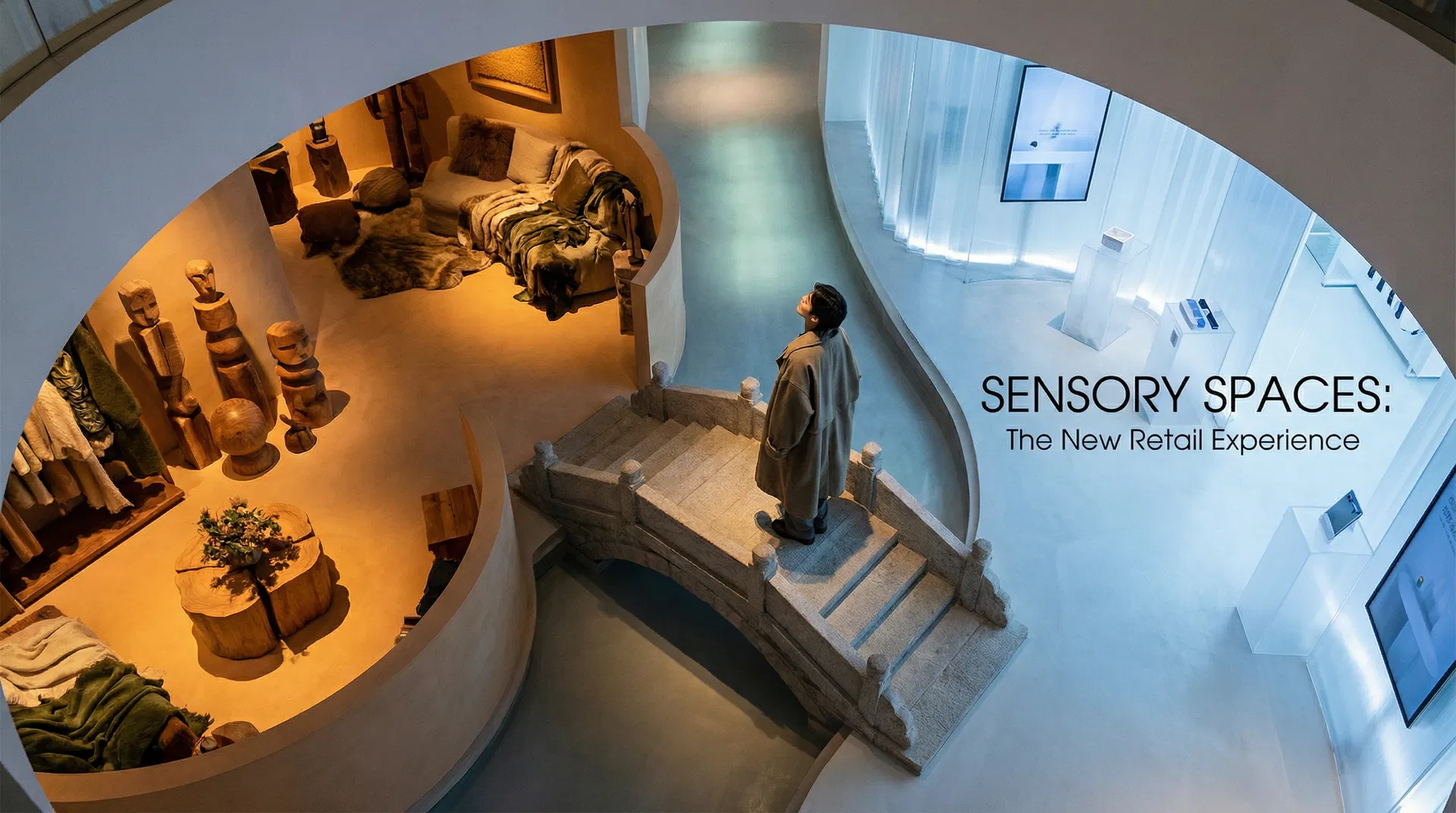
Luxury travel, private showings, immersive boutiques, and brand residencies are outpacing traditional product sales. Executives identify luxury travel as the segment with the highest growth potential for 2026. The boutique is becoming a stage. The transaction is becoming secondary to the theatre.
"We will see a much higher bar for anything claiming to be premium. Trade down on anything undifferentiated. Trade up for brands that deliver emotional or experiential value." — Leah Brier Bienstock, Head of Strategy, Redscout
Geography Is Being Redrawn
The United States has emerged as the new epicenter of global luxury fashion in 2026. Major houses, including Dior, Gucci, Louis Vuitton, and Moncler, are staging Cruise 2027 runway shows across New York and Los Angeles, signaling that America is now both the consumer capital and the cultural engine of luxury.
China, representing 25% of global luxury sales, is on a path of gradual recovery, with BNP Paribas projecting 6% growth and a 10% CAGR from 2027 to 2031. India and the Middle East are rapidly expanding their affluent consumer bases and command serious strategic attention.
The Strategic Imperative
Deloitte's 2026 Global Powers of Luxury report, drawing on 420 senior executives across ten countries, finds the industry moving toward a relationship-driven model. Value over volume. Cultural relevance over category presence. The ability to blend intimacy with innovation is now the defining competitive advantage.
Brands that will lead the next decade are not the ones with the largest store footprints; they are the ones that have mastered the architecture of trust: consistent, personalized, purposeful, and rare in the right ways.
The rules have changed. The question is whether your brand is writing new ones, or still playing by the old ones.
Top 10 Luxury Retail Resources
Essential reading for luxury retail professionals in 2026:
Deloitte: Global Powers of Luxury Goods 2026 — 420 senior executives across 10 countries. The industry's most authoritative forward-looking annual report on the state and future of luxury. deloitte.com
Bain & Company: Bain Luxury Study — The definitive annual sizing of the global personal luxury goods market. The gold standard for market data and strategic benchmarking. bain.com
BNP Paribas: 2026 Luxury Goods Sector Outlook — Deep financial analysis covering margins, FX headwinds, regional performance, and investment signals for the luxury sector. cib.bnpparibas
Clarkston Consulting: 2026 Luxury Retail Trends Report — Expert consultant perspectives on demographic shifts, personalization strategies, and ethical brand architecture. clarkstonconsulting.com
EMARKETER: Luxury vs. Affordability: The 2026 Retail Fork — Data-driven analysis of the widening gap between luxury and mass-market spending behavior and its strategic implications. emarketer.com
J.P. Morgan: Luxury Market Outlook (Global Research) — Regional breakdowns across US, China, Japan, and Europe with credit card spending data and real-time demand signals. jpmorgan.com
Shopify Enterprise: Luxury Trends: Market Growth & Opportunities — Practical analysis of unified commerce infrastructure and hyperpersonalization strategies for luxury brands at scale. shopify.com/enterprise
BSPK: Global Luxury Retail Trends 2026 — Five defining themes: AI clienteling, phygital journeys, Gen Z shifts, sustainability, and experiential retail. bspk.com
CBRE / JLL via Commercial Property Executive: Luxury Retail 2026 — Where luxury brands are opening, how landlord-tenant dynamics are shifting, and the rise of brand-owned real estate. commercialsearch.com
Istituto Marangoni: Why the U.S. Will Lead Global Luxury Fashion in 2026 — Cultural analysis of America's emergence as the creative and commercial capital of the global luxury fashion world. istitutomarangoni.com
What's Your Next Move?
The brands winning in 2026 are those redefining what luxury means; not defending what it was.
— CONTINUE THE CONVERSATION
Want deeper insights like this?
Ask Ghalia's Brain — 20 years of retail expertise, available 24/7 on WhatsApp. Start for free.
ASK GHALIA'S BRAIN