How Scarcity Shapes Desire: The Psychology of Ephemeral Retail

Ghalia Boustani
PhD · Retail Expert & Author
We queue for what is about to disappear. We photograph what we may never see again. We desire most intensely what we cannot have forever. This is not irrational, it is deeply human. And it is the engine that powers ephemeral retail.
Of all the forces that shape consumer behaviour in physical retail, scarcity may be the most powerful and the least understood. Not artificial scarcity, the 'only 3 left in stock' notification that has become a cliché of e-commerce, but genuine scarcity: the knowledge that an experience, a space, an encounter is available for a limited time and will not be repeated.
This is what pop-up stores, at their best, offer. Not just a product or an environment, but an encounter with transience. And transience, it turns out, changes everything about how we experience, value, and remember.
"Scarcity does not just increase desire. It changes the quality of attention we bring to an experience."
The Psychology of Limited Time
The relationship between scarcity and desire is well established in psychological research. Cialdini's work on influence identified scarcity as one of the six fundamental principles of persuasion. But the version of scarcity that operates in ephemeral retail is more nuanced than simple supply limitation.
When a consumer enters a pop-up store, they bring with them a specific psychological state: the awareness that this space is temporary. This awareness produces several measurable effects.
Heightened attention: When we know an experience is finite, we attend to it more carefully. We notice details we would overlook in a permanent environment. The light, the scent, the texture of materials, the expression on the staff member's face, these become salient in a way they rarely are in the stores we pass every day.
Emotional intensification: The knowledge that something will end intensifies our emotional response to it. This is why sunsets move us more than noon. Why the last night of a holiday feels different from the first. Ephemeral retail borrows from this deep psychological pattern.
Memory encoding: Experiences that are perceived as unique and time-limited are encoded differently in memory. They become episodes, stories, moments, rather than the undifferentiated blur of routine shopping. A consumer who visited a pop-up three years ago can often describe it in vivid detail. Ask them about their last visit to a department store and watch the difference.
FOMO and Its Discontents
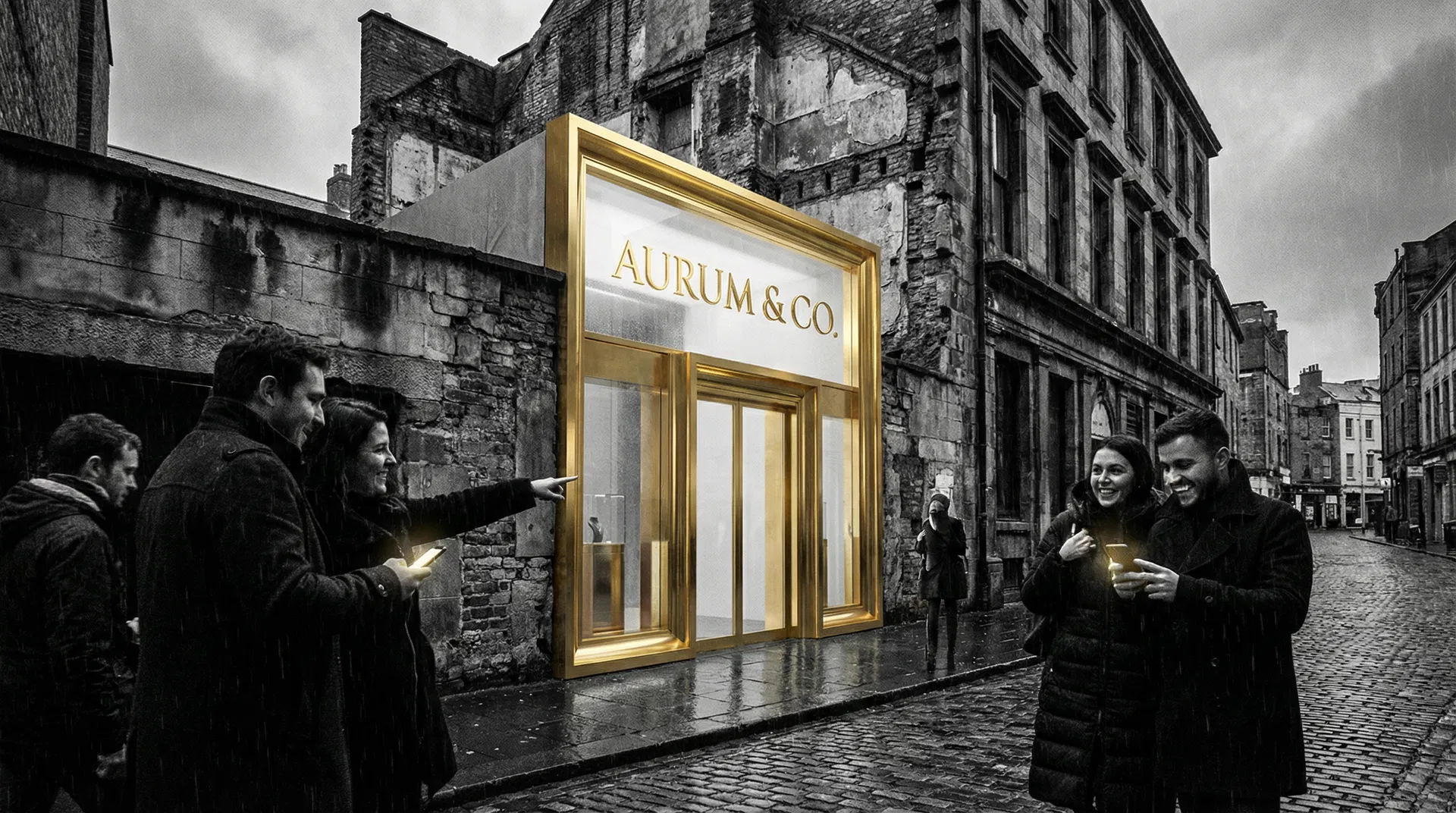
The fear of missing out, FOMO, is often cited as the primary driver of pop-up attendance. And it plays a role, certainly. The social media post that announces 'only open until Sunday' creates genuine urgency.
But reducing the psychology of ephemeral retail to FOMO misses the deeper mechanism. FOMO is about anxiety, the fear of being excluded. The more powerful force at work in the best pop-up experiences is not fear but anticipation, the positive excitement of participating in something rare.
The brands that design for FOMO produce anxiety-driven visits: rushed, transactional, focused on acquisition rather than experience. The brands that design for anticipation produce something qualitatively different: engaged, exploratory, memorable visits that build genuine brand affinity.
The Collector's Mindset
One of the most interesting psychological phenomena I have observed in my research is what I call the collector's mindset. Consumers who engage regularly with ephemeral retail begin to approach it with the mentality of a collector: each pop-up is an experience to be added to a personal collection of encounters.
This mindset transforms the consumer's relationship with the brand from transactional to curatorial. They are not buying products; they are collecting experiences. They keep the tote bag, the receipt, the photograph, not as souvenirs in the tourist sense, but as evidence of encounters that form part of their personal narrative.
For brands, this is extraordinarily valuable. A consumer in the collector's mindset is not price-sensitive in the conventional sense. They are experience-sensitive. They will travel further, queue longer, and spend more, not because they have been manipulated into urgency, but because the experience is genuinely worth collecting.
Designing for Scarcity
The practical implications for pop-up design are significant. If scarcity changes the quality of attention, then every detail matters more in a temporary space than in a permanent one. The atmospheric design, the staff interaction, the sensory environment, all of these are amplified by the consumer's awareness that this moment is finite.
This is both an opportunity and a risk. The opportunity is that a well-designed pop-up can produce a depth of engagement that a permanent store rarely matches. The risk is that a poorly designed pop-up is not simply forgettable, it is memorable for the wrong reasons. The heightened attention that scarcity produces works in both directions.
Design principles for scarcity-driven retail:
Sensory richness: In a temporary space, sensory elements, scent, sound, texture, light, carry disproportionate weight. Design them deliberately.
Human warmth: The staff interaction in a pop-up is amplified by the sense of occasion. Invest in it accordingly.
Artifact creation: Give visitors something physical to take away, not as a transaction, but as a memory anchor. The object carries the experience forward in time.
Narrative closure: Design the exit as carefully as the entrance. The last moment shapes the memory of the whole.
"In ephemeral retail, every detail is amplified. Scarcity does not forgive mediocrity."
Beyond the Pop-Up
The psychology of scarcity is not limited to pop-up stores. It operates wherever temporariness is present: in limited editions, in seasonal collections, in time-limited experiences within permanent stores, in exclusive events.
The most sophisticated brands use scarcity as a tool across their entire ecosystem, creating moments of intensity within a broader relationship. The permanent store provides consistency and access. The pop-up provides intensity and exclusivity. The limited edition provides desire and collectibility. Together, they create a rhythm that keeps the brand relationship dynamic and emotionally rich.
Understanding the psychology that makes this work, not as a manipulation technique but as a genuine insight into how human beings experience value, is one of the most important capabilities a brand can develop.
Have you ever queued for a pop-up or a limited release, and if so, what was it about the experience that made it worth the wait? The answers always reveal something about desire that the data alone cannot capture.
— CONTINUE THE CONVERSATION
Want deeper insights like this?
Ask Ghalia's Brain — 20 years of retail expertise, available 24/7 on WhatsApp. Start for free.
ASK GHALIA'S BRAIN