
Ghalia Boustani
PhD · Retail Expert & Author
There is a paradox at the heart of ephemeral retail. The most memorable retail experiences are often those that disappear. The pop-up that existed for three days in a disused warehouse. The brand installation that appeared in a park for a weekend. The concept store that occupied a prestigious address for six months and then vanished. These temporary formats, precisely because of their impermanence, create a quality of attention and a depth of experience that permanent retail often struggles to match.
This is not accidental. Scarcity is one of the most powerful drivers of human attention and desire. When an experience is available for a limited time, in a limited place, the urgency it generates amplifies every element of what is offered. Consumers do not simply visit. They make a deliberate choice to be there , and that intention shapes the quality of their presence.
Ephemerality is not a limitation. It is a strategic tool , one of the most powerful in the retail brand's arsenal.
The Functions of Ephemeral Retail
Ephemeral retail formats serve multiple strategic functions simultaneously, which is part of what makes them such versatile tools in the brand's commercial toolkit.
Market Testing
Before committing to a permanent retail presence in a new market, geography, or customer segment, brands can use pop-up formats to test demand, refine their offer, and build relationships with local consumers at a fraction of the fixed cost of permanent retail. This market intelligence function is commercially valuable , and increasingly important as brands expand into new territories where consumer behaviour, cultural context, and competitive dynamics may differ significantly from their home market.
Product Launch and Cultural Activation
Pop-up formats have become the preferred vehicle for product launches in categories from beauty to electronics to luxury fashion. The concentrated, curated environment of a temporary activation creates a level of controlled brand experience that a press release or a digital campaign cannot replicate. Consumers who attend a product launch pop-up become advocates , they have a story to tell, an experience to share, a memory attached to the product.
Brand Case , Jacquemus: Jacquemus has mastered the pop-up as cultural event. The brand's temporary installations , in lavender fields in Provence, on the beaches of Capri, in unexpected urban spaces , consistently generate extraordinary social media amplification. The installations are designed to be photographed and shared. Each one becomes a visual moment that extends the brand's reach far beyond the physical attendees. The pop-up is simultaneously a retail format and a content production event.
Community Building
Some of the most effective ephemeral retail formats are less focused on transaction than on community , creating spaces where consumers who share a passion, an aesthetic sensibility, or a cultural identity can come together around the brand. These community-oriented pop-ups generate loyalty and advocacy that persists long after the format has closed.
Brand Case , Dover Street Market: Although Dover Street Market's permanent locations are among the most distinctive retail environments in the world, the brand's approach to temporary activations and within-store installations has been equally influential. Regular installation changes by the brand's designer partners transform the stores into ongoing cultural events. Each new installation creates a reason to return , and a new conversation about the brand's cultural positioning.
Designing for Ephemerality
Designing an ephemeral retail format requires a different set of design principles than designing a permanent store. The constraints are more severe , budget, time, and often the physical characteristics of the temporary space , but the creative freedom can be greater. Without the need for long-term durability, brands can take risks with materials, spatial concepts, and experiential elements that would be impractical in a permanent installation.
The most effective ephemeral formats are designed around a single, powerful idea , one concept, executed with total commitment. They create a complete world, however small or brief. And they leave the visitor with something: a sensation, a memory, an object, a story.
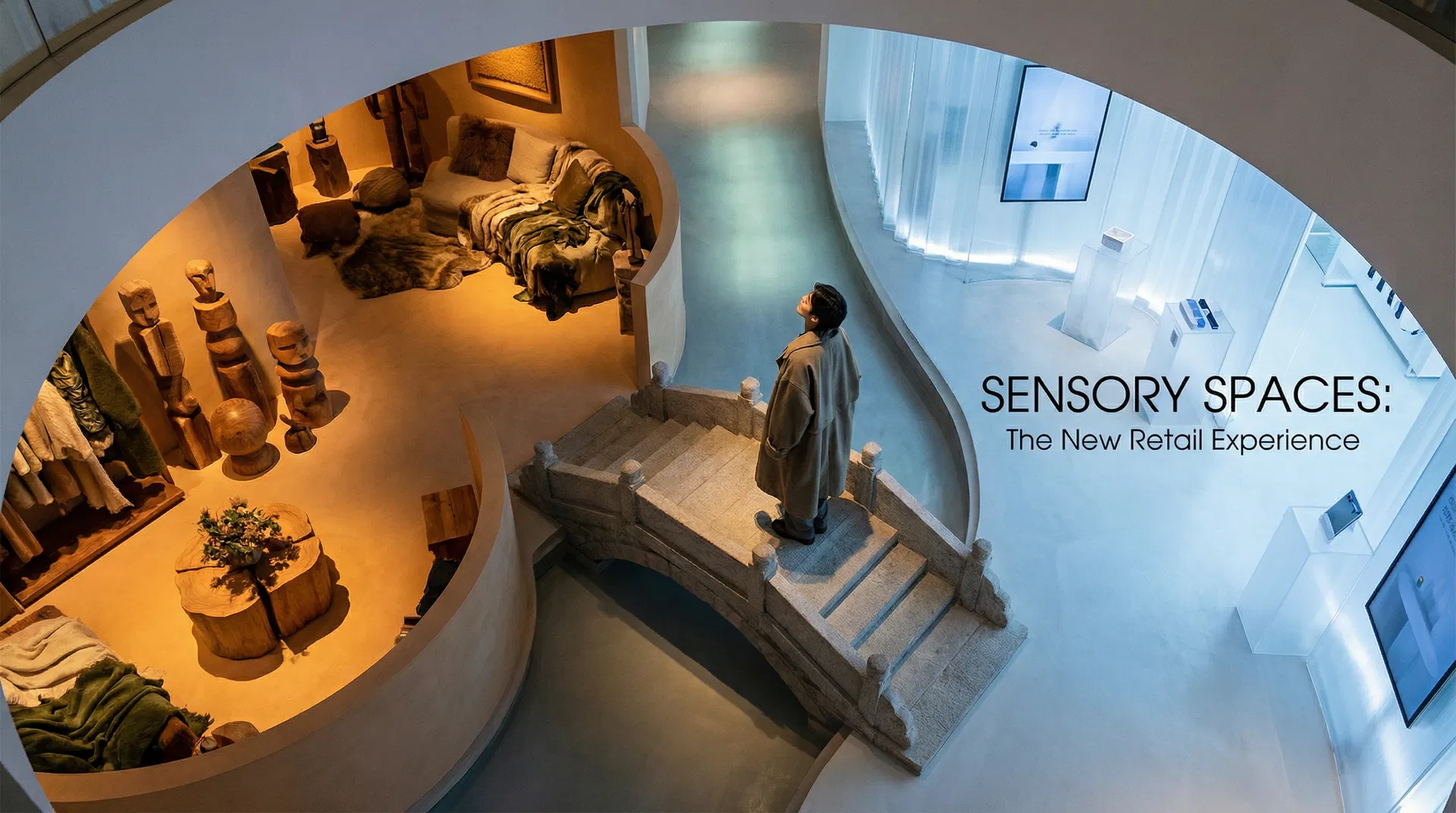
Sensory design is particularly important in ephemeral retail. Because the visitor knows they may never return, every sensory element of the experience takes on heightened significance. The scent of the space, the quality of the light, the texture of the materials, the sound design , all of these contribute to an experience that, if designed with intention, will be remembered long after the installation has been dismantled.
The Economics of Ephemeral Retail
The commercial logic of ephemeral retail is more complex than it might appear. The visible costs are typically lower than permanent retail , shorter lease terms, lower fit-out investment, smaller staff requirements. But the hidden costs , the design and logistics of creating a temporary format, the frequency with which formats must be refreshed to sustain consumer interest, the opportunity cost of management attention , can be substantial.
The most important economic consideration is not cost but value created. A well-executed pop-up that generates significant media coverage, social media amplification, and consumer advocacy may deliver brand value that vastly exceeds its direct commercial return. The calculation is not simply revenue divided by cost. It is the aggregate of commercial revenue, media value, consumer data acquired, market intelligence generated, and brand positioning advanced , all of which must be weighed against the total investment.
The Permanence of Temporary Memories
What ultimately distinguishes the best ephemeral retail from the merely temporary is the quality of the memory it creates. A pop-up that simply sells products in a temporary space is not ephemeral retail. It is just a short-term shop. Ephemeral retail, properly conceived, creates an experience that outlasts the physical format , that lives in the consumer's memory, in the photographs they took, in the conversations they have with others who were not there.
This is the paradox and the power of ephemeral retail. It disappears. And in disappearing, it becomes memorable. It becomes part of the brand's cultural history , a moment that shaped consumer perceptions and deepened the brand relationship in ways that permanent retail, by virtue of its permanence, rarely achieves.
Conclusion
Ephemeral retail is not a tactical supplement to a brand's permanent retail strategy. For many brands , particularly those in fashion, beauty, luxury, and culture-adjacent categories , it is a core strategic capability. It creates market intelligence, generates cultural capital, builds community, and produces commercial value that is disproportionate to its investment. The brands that use it most effectively do so with the same strategic rigour they apply to their permanent estate , with clear objectives, disciplined design, and a genuine understanding of what they are trying to create and why.
— CONTINUE THE CONVERSATION
Want deeper insights like this?
Ask Ghalia's Brain — 20 years of retail expertise, available 24/7 on WhatsApp. Start for free.
ASK GHALIA'S BRAIN