
Ghalia Boustani
PhD · Retail Expert & Author
Luxury retail is often discussed as though it were simply premium retail with better finishes. It is not. Luxury retail operates according to a different commercial logic, a different relationship with the consumer, and a different theory of value creation. Understanding these differences , and managing them with discipline , is what separates brands that sustain luxury positioning from those that claim it without possessing the underlying structure to maintain it.
This article proposes a holistic framework for luxury retail brand management: a four-dimensional model that encompasses the product universe, the brand environment, the human relationship, and the temporal dimension of luxury consumption. Each dimension is distinct. Each is necessary. None is sufficient alone.
Luxury is not a price point. It is a coherent system of value, meaning, and experience , one that must be managed with the same rigour applied to its creation.
Dimension One: The Product Universe
At the foundation of any luxury brand is the product , its quality, its craftsmanship, its rarity, and the mythology of its creation. These are not merely material attributes. They are the raw material of legitimacy. A luxury brand that cannot substantiate its product claims , through demonstrable craftsmanship, identifiable materials, traceable heritage, or genuine scarcity , is building on sand.
Managing the product universe in luxury retail means attending to several interconnected questions. What is the brand's signature product , the piece that anchors its identity and communicates its DNA most powerfully? How does the broader product range relate to this signature? How does the brand manage the tension between breadth (which generates revenue) and focus (which sustains desirability)?
Brand Case , Cartier: Cartier's product universe is anchored by a small number of iconic pieces , the Love bracelet, the Tank watch, the Panthère ring , that have sustained cultural relevance across decades. These icons are not merely popular products. They are legitimacy anchors around which the broader Cartier universe is organised. The brand can introduce new categories and new designs because the icons hold the positioning stable.
Dimension Two: The Brand Environment
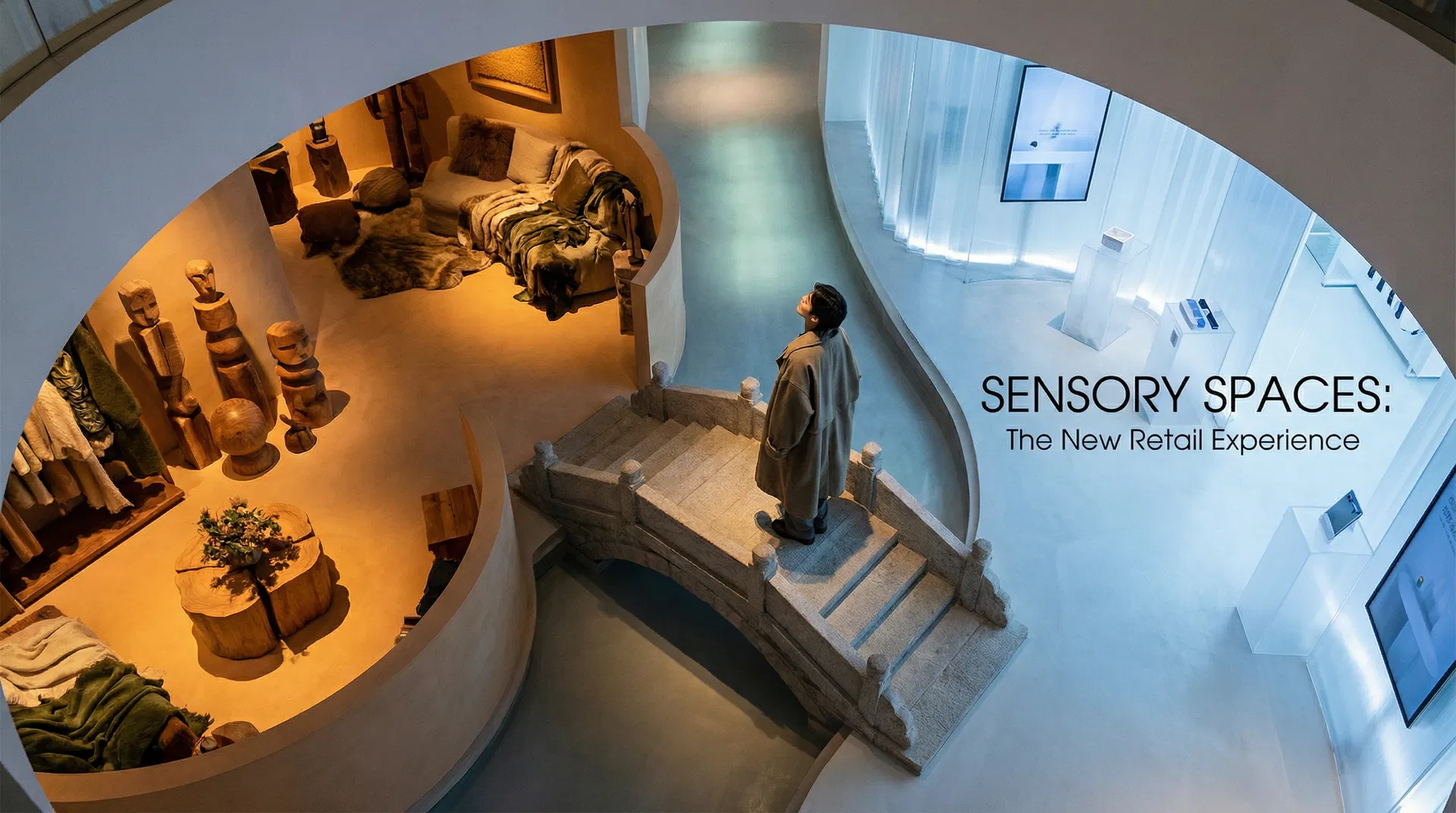
The physical environment in which a luxury brand operates is not a backdrop. It is a primary medium of brand expression. The architecture, interior design, materiality, spatial logic, and sensory atmosphere of a luxury retail environment communicate the brand's values with a precision and density that advertising cannot replicate.
Managing the brand environment means treating every physical touchpoint , flagships, boutiques, pop-ups, corners within department stores , as a curated space that expresses brand identity with consistency and intentionality. It also means understanding that different environments serve different functions. The flagship is a cathedral: it communicates the brand's full aspirational universe. The boutique is a home: it creates intimate, personalised relationships. The pop-up is a provocation: it creates urgency, surprise, and cultural conversation.
Brand Case , Louis Vuitton: Louis Vuitton's collaboration strategy with artists and architects , from Frank Gehry to Yayoi Kusama to Virgil Abloh , consistently extends the brand's cultural authority beyond the domain of fashion. Each collaboration transforms a retail activation into a cultural event. The brand environment becomes a stage for art, ideas, and conversation. The consumer is not shopping. They are participating.
Dimension Three: The Human Relationship
In luxury retail, the human relationship is both the most powerful and the most fragile element of the brand experience. The relationship between a client and a personal advisor at a luxury maison , built over years, grounded in knowledge of the client's preferences, occasions, and aesthetic sensibility , is irreplaceable by digital technology. It is also the primary driver of client retention and lifetime value in luxury commerce.
Managing the human relationship at scale requires investment in three areas: recruitment (identifying individuals whose personal values and relational capacities align with the brand's), training (not product knowledge alone, but the full art of clienteling , relationship building, emotional intelligence, cultural attunement), and empowerment (giving client advisors the authority and resources to deliver genuine, personalised service).
Brand Case , Chanel: Chanel's approach to clienteling is legendary within the industry. The brand invests heavily in the development of its salon staff , not merely as salespeople but as brand ambassadors and personal stylists. The relationship between a Chanel client and her advisor often spans decades and extends across product categories. This relationship is Chanel's most durable competitive advantage. It cannot be replicated by a chatbot or a personalisation algorithm.
In luxury, the relationship is the product. The physical object is what the consumer takes home. The relationship is why they return.
Dimension Four: The Temporal Dimension
Luxury operates on a different relationship with time than mass-market retail. It is not about the immediate transaction. It is about the long arc of a relationship between a consumer and a brand , a relationship that may span a lifetime and extend across generations. The watch that a father buys today may become the heirloom that his daughter inherits. The Birkin bag that a consumer acquires this year may appreciate in value over the next decade. Luxury goods are not consumed. They are held, valued, and transmitted.
Managing the temporal dimension means attending to brand heritage , the history, savoir-faire, and narrative of origin that gives luxury goods their depth of meaning. It means managing product longevity , designing goods that last and that appreciate in cultural and material value. And it means cultivating relationships with consumers that outlast individual purchases.
Brand Case , Patek Philippe: Patek Philippe's famous advertising campaign , 'You never actually own a Patek Philippe. You merely look after it for the next generation' , is a masterclass in temporal brand positioning. The brand is not selling a watch. It is offering membership in an intergenerational narrative of value, craft, and custodianship. This positioning makes price resistance structurally irrelevant. The consumer is not comparing prices. They are evaluating a legacy.
Integrating the Four Dimensions
The power of this framework lies not in any single dimension but in the coherence of all four. A brand with an extraordinary product universe that is sold in an undistinguished environment by poorly trained staff has failed to integrate the dimensions. A brand with a beautiful store and exceptional service that lacks genuine product substance will eventually be exposed as style without foundation.
The luxury brands that endure , Hermès, Patek Philippe, Chanel, Cartier , are those that manage all four dimensions with equal discipline and with a clear understanding of how each reinforces the others. The product gives the environment meaning. The environment gives the relationship context. The relationship makes the temporal dimension personal. And the temporal dimension makes the product transcend its material nature.
Conclusion: Management as a Creative Act
What this framework ultimately argues is that luxury brand management is itself a creative act , one that requires the same attentiveness, judgment, and coherence as the design of a great product or a great space. The luxury brands that will define the next decade are not those with the most powerful advertising or the most aggressive digital strategy. They are those that understand the system of luxury , its product, environment, human, and temporal dimensions , and manage that system with patience, precision, and genuine respect for what they are curating.
, Dr. Ghalia Boustani
— CONTINUE THE CONVERSATION
Want deeper insights like this?
Ask Ghalia's Brain — 20 years of retail expertise, available 24/7 on WhatsApp. Start for free.
ASK GHALIA'S BRAIN