Why Pop-Up Stores Are No Longer a Trend — They're a Strategy

Ghalia Boustani
PhD · Retail Expert & Author
For too long, pop-up stores have been treated as a novelty, a flashy shortcut to press coverage. After twenty years of research and practice, I want to make the case for something more serious: the pop-up as one of the most sophisticated strategic tools available to a brand today.
The first time most people encounter a pop-up store, they experience it as an event. Something exciting is happening, in an unexpected space, for a limited time, and they want to be part of it. This is the surface of ephemeral retail. It is what gets photographed and shared. And it is, unfortunately, where many brands stop thinking.
But underneath that excitement lies a structure. A logic. A set of strategic functions that, when understood and deliberately designed, make the pop-up one of the most versatile and powerful formats in a brand's distribution and communications arsenal.
I have been researching pop-up stores since before the term was widely used. Across four books, dozens of academic articles, and direct work with brands across Europe and the Middle East, I have watched the format evolve from a curiosity into a cornerstone of contemporary retail strategy. What I want to share here is not the surface, the aesthetics, the viral moments, but the architecture beneath.
"A pop-up is not an event with a cash register. It is a strategic instrument , and it only works when treated as one."
The Evolution: From Stunt to Strategy
Pop-up retail emerged in its modern form in the late 1990s, driven by a convergence of factors: rising rents that made short-term leases attractive, a growing consumer appetite for novelty and exclusivity, and brands beginning to understand that physical presence could serve communications goals, not just distribution ones.
In its early phase, the format was largely opportunistic. Brands used pop-ups to clear surplus stock, to test a location before committing to a lease, or simply to generate press coverage. The temporary nature was a constraint they worked around, not a feature they designed for.
Something shifted in the 2010s. Brands began to understand that temporariness itself was valuable, that scarcity and urgency were not inconveniences but levers. Digital-native brands, unburdened by legacy retail thinking, were particularly quick to grasp this. They used pop-ups not as substitutes for permanent stores but as intentional, time-limited experiences that served specific strategic objectives: building community, entering new markets, launching products, generating data.
Today, the most sophisticated uses of the format treat the pop-up as a strategic instrument. Not an event with a cash register, but a designed encounter with measurable objectives and deliberate integration into the broader brand system.
The Five Strategic Functions of a Pop-Up Store
Through my research, including analysis of over 90 case studies documented in my 2025 book, I have identified five distinct strategic functions that pop-ups can serve. The important word is 'can': a pop-up that tries to serve all five simultaneously will likely serve none of them well. The brands that use this format most effectively choose their primary function deliberately, and design everything else in service of it.
1. Market Testing
Before committing to a permanent retail presence in a new geography or consumer segment, a pop-up allows a brand to test demand, gather data, and build local relationships at a fraction of the cost and risk. This is not about selling product; it is about learning. Where do customers come from? How do they move through the space? What do they ask about? What do they ignore?
I have worked with brands who used a single two-week pop-up to gather enough intelligence to reshape their entire expansion strategy. The insights available from a well-designed market test pop-up are qualitatively different from what any amount of desk research can produce, because they are grounded in real behaviour in a real space.
2. Brand Storytelling
A pop-up offers what a permanent store often cannot: total environmental control in service of a single narrative. Without the need to accommodate everyday retail operations, the brand can create an immersive world, one that communicates its values, its aesthetic, its point of view with a coherence and intensity that a multi-purpose store environment rarely achieves.
This is why luxury brands, which understand the power of narrative better than most, have been among the most sophisticated users of the pop-up format. A Chanel pop-up is not trying to sell you a handbag. It is trying to immerse you in a world where everything, the architecture, the materials, the lighting, the scent, tells you who Chanel is.
3. Community Activation
For brands with a strong community dimension, pop-ups serve as gathering points, places where the brand's most engaged consumers can meet each other, meet the brand's people, and deepen their connection to something they already care about.
The commercial value of community activation is often underestimated because it does not produce immediate, measurable sales uplift. But the brands that have built genuine communities around their physical activations, Supreme, Rapha, Glossier in its early days, will tell you that the long-term value, in loyalty, in advocacy, in lifetime customer value, far exceeds what any single transaction could produce.
4. Product Launch
The pop-up has become the preferred format for product launches in categories from beauty to technology to fashion. The reasons are straightforward: it creates a controlled environment for experiencing the product, it generates social content through designed photo opportunities and exclusive access, and it creates a sense of event that a standard retail shelf launch cannot match.
But the best product launch pop-ups go beyond display. They create experiences that are specifically designed to showcase what makes the product different. A skincare brand that lets you experience its ingredients through a sensory journey. A technology brand that builds an interactive environment demonstrating its product's capabilities. A fashion brand that stages its new collection in a way that communicates not just what the clothes look like but how they are meant to be lived in.
5. Revenue Generation
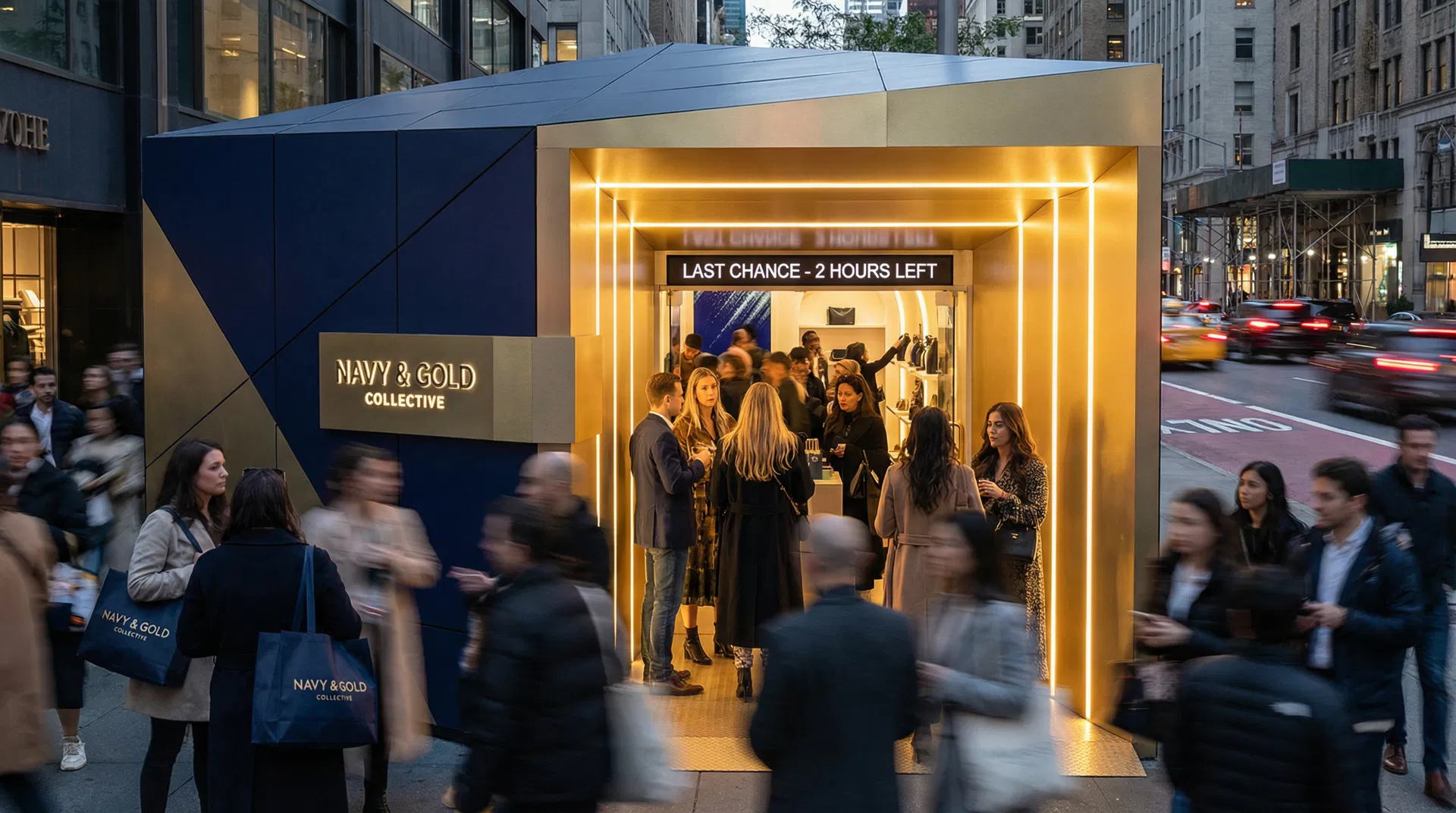
Yes, pop-ups can and do generate direct revenue. But this function is most effective when it is designed rather than assumed. Revenue-focused pop-ups work best with clear commercial mechanics: limited editions, exclusive access, bundled offers, or simply the urgency that temporariness itself creates.
The mistake is treating revenue as the default measure of a pop-up's success when the activation was actually designed to serve one of the other four functions. A brand storytelling pop-up that generates modest sales but significant media coverage and brand recall has not underperformed. It has performed exactly as designed, assuming the objective was clear from the start.
"A pop-up that tries to do everything , test a market, tell a story, build community, launch a product, and generate revenue , will do none of these things well. Choose your function. Design for it. Measure against it."
Why the Format Keeps Growing
The pop-up format has grown consistently for two decades, through recessions, pandemics, and the rise of e-commerce. This is not a trend. Trends do not survive twenty years of economic disruption.
The format endures because it addresses structural needs that are not going away: the need for brands to be physically present without the fixed costs of permanent retail; the consumer desire for novelty, exclusivity, and experience; the strategic value of a format that can be deployed quickly, tested rigorously, and evolved continuously.
As rents continue to rise, as consumer attention becomes more fragmented, and as brands seek formats that combine physical presence with digital amplification, the strategic case for pop-up retail only strengthens.
What Comes Next
The next evolution of the pop-up format will be shaped by three forces: technology that enables richer, more personalised physical experiences; sustainability concerns that demand more thoughtful approaches to temporary construction; and the integration of ephemeral retail into broader brand ecosystems that include permanent stores, digital channels, and community platforms.
The brands that will lead this evolution are the ones that treat the pop-up not as a marketing tactic but as a strategic capability, one that is resourced, measured, and continuously refined with the same discipline they apply to any other part of their business.
The pop-up store is no longer a trend. It is a strategy. And the brands that understand the difference will have a significant advantage in the decade ahead.
I would be curious to know: has your brand used a pop-up format in the last two years, and if so, which of the five strategic functions was it designed to serve? The answers are always revealing.
— CONTINUE THE CONVERSATION
Want deeper insights like this?
Ask Ghalia's Brain — 20 years of retail expertise, available 24/7 on WhatsApp. Start for free.
ASK GHALIA'S BRAIN