Retail in the Middle East: A Market the World Should Be Watching

Ghalia Boustani
PhD · Retail Expert & Author
When Western retail analysts discuss the future of the industry, they tend to look east to China or north to Scandinavia. There is a third direction they consistently underestimate: the Middle East. Having worked, taught, and consulted across Beirut, Istanbul, and the wider region for two decades, I want to make the case for a market that is more sophisticated, more dynamic, and more instructive than its global reputation suggests.
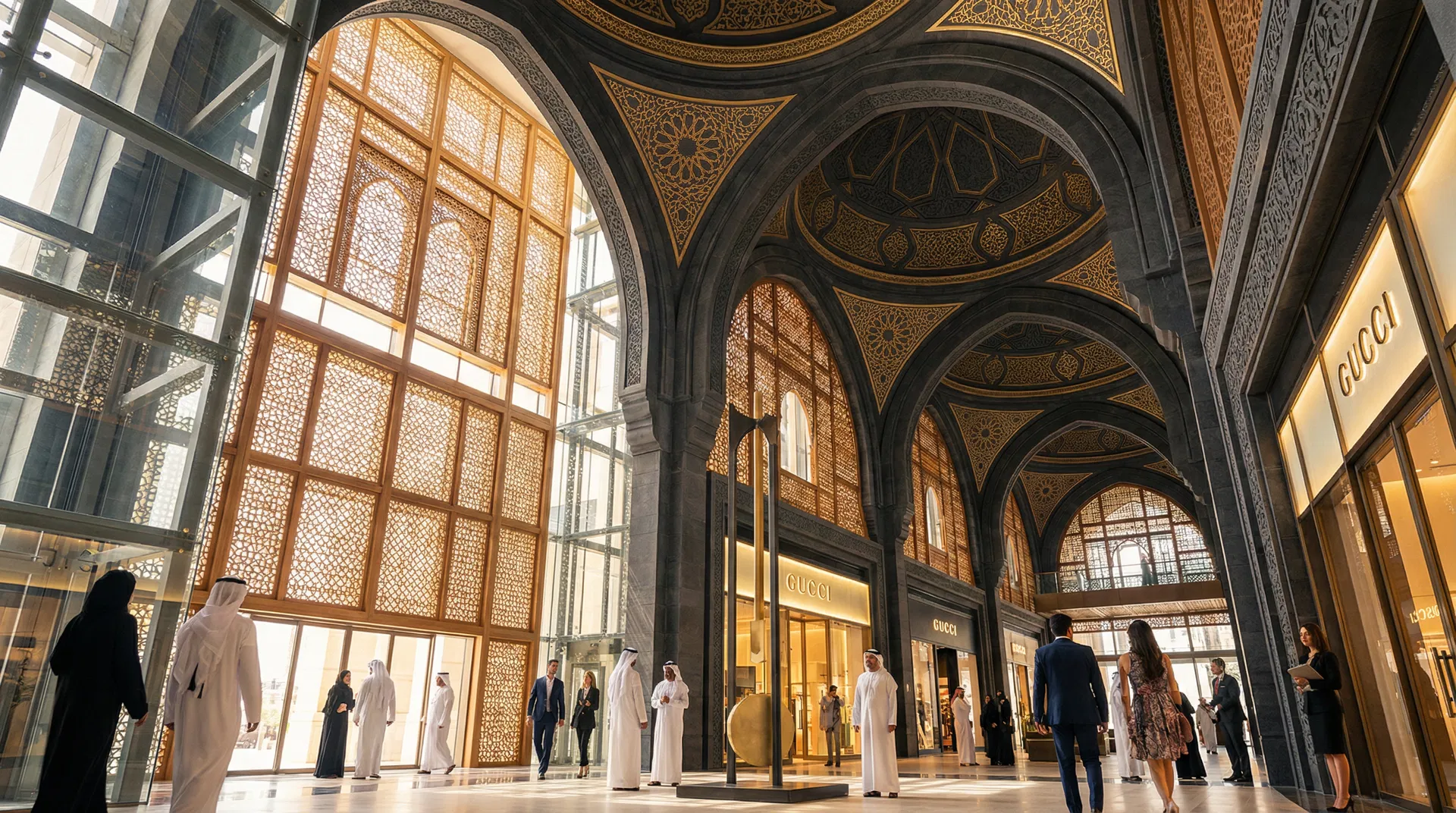
There is a version of the Middle East retail story that is told often, and that is not wrong, exactly, but that is profoundly incomplete. It is the story of mega-malls and luxury consumption: the Dubai Mall, the vast temple-like department stores of Riyadh, the gleaming flagships of international luxury houses that line the boulevards of Abu Dhabi. It is a story of scale, aspiration, and purchasing power.
That story is real. But it is the surface of something more complex, more culturally layered, and, from a retail strategy perspective, more interesting. Beneath the spectacle of Gulf luxury retail lies a regional consumer landscape that is among the most diverse, most demanding, and most rapidly evolving in the world. And beyond the Gulf, in markets like Beirut, Istanbul, Cairo, and Amman, a different retail story is unfolding altogether: one of resilience, creativity, cultural specificity, and an approach to the physical store that Western retail has much to learn from.
I have been part of that story for twenty years. This article is my attempt to share what I have observed, not as an outside analyst, but as someone who has taught in these cities, advised brands operating within them, and watched the retail landscape shift through crises, booms, disruptions, and reinventions that have no equivalent in the more stable retail environments of Europe and North America.
"The Middle East does not need Western retail to show it what the future looks like. In several important ways, it is already there."
Why the Middle East Is Misread
The misreading begins with geography. 'The Middle East' is not a retail market. It is a collection of profoundly different markets, each with its own consumer culture, its own relationship to luxury and aspiration, its own history with physical retail, and its own pace of change. The consumer in Beirut is not the consumer in Dubai, who is not the consumer in Istanbul, who bears limited resemblance to the consumer in Cairo or Amman. Treating the region as a monolith is the first and most consequential error that international brands entering these markets consistently make.
The second misreading is about sophistication. The assumption, rarely stated explicitly but pervasive in how international brands approach the region, is that Middle Eastern consumers are aspirational adopters of Western retail norms: that they want what Paris and London have, delivered with appropriate regional adaptation. This is wrong in ways that are both commercially costly and culturally condescending.
Middle Eastern consumers, particularly in the major urban centres, are among the most internationally travelled, most digitally connected, and most aesthetically informed in the world. They have encountered the flagship stores of every major luxury house in their home cities and on their travels. They have access to global e-commerce. They are not discovering international retail, they are evaluating it, often critically, against a cultural sensibility and a set of expectations that are entirely their own.
From the field: In my years of teaching and consulting in Beirut and across the region, I have consistently observed that the students and practitioners who think most originally about retail, who are most willing to question inherited assumptions and most creative in designing new formats, come from markets that have been forced by circumstance to improvise. Constraint, it turns out, is one of the most powerful drivers of retail innovation.
Six Things the Middle East Retail Market Is Teaching the World
Rather than offer a survey of the regional market, which would require a book, not an article, I want to identify six specific characteristics of Middle Eastern retail that carry lessons for the global industry. These are observations grounded in direct experience, not secondary research.
01 The Social Store Was Never in Question Here
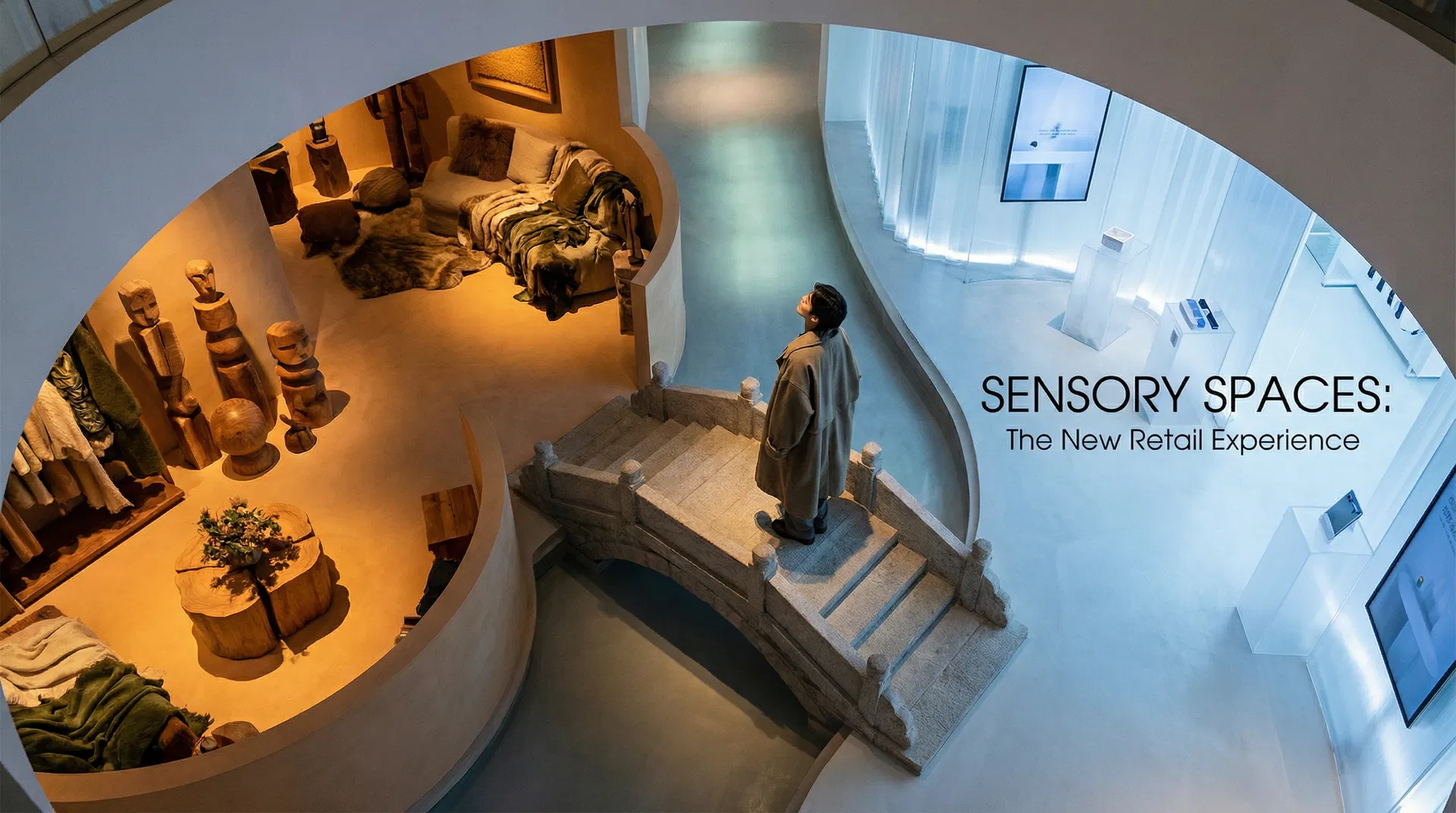
In many Western retail contexts, the 'social store', the space designed for gathering, conversation, and community as much as commerce, is presented as an innovation, a response to the rise of e-commerce and the loneliness epidemic. In much of the Middle East, it was never not this.
The souk, the bazaar, the covered market, these are not merely historical antecedents of the modern store. They are living retail traditions in which the social function of commerce has always been primary. You do not go to the souk only to buy. You go to encounter, to negotiate, to be seen, to participate in the life of the city. The 'experiential retail' that Western consultants present as the future of the industry is, in a meaningful sense, a rediscovery of what Middle Eastern retail culture never lost. Brands entering these markets who understand this design accordingly, and those who don't arrive with a template that feels foreign, because it is.
02 Resilience as a Core Retail Competency
The retail markets of Lebanon, Turkey, and parts of the wider region have operated through conditions that would have shuttered most Western retail businesses: currency collapses, political instability, conflict, hyperinflation, and the compound disruption of a global pandemic layered onto already fragile economies. The retailers who have survived, and in some cases thrived, through these conditions have developed a set of competencies that are genuinely rare.
Operational agility. The ability to pivot format, product mix, and price architecture rapidly in response to conditions that change not year by year but week by week. A deep, relationship-based loyalty with customers built on trust rather than transaction. Creative solutions to supply chain challenges that make the operational problems of stable Western markets look trivial. These are not the competencies that retail business schools teach. They are the competencies that the market teaches, brutally and effectively, to those willing to learn.
03 Pop-Up Culture Was Native, Not Imported
The Western retail narrative presents the pop-up store as an innovation of the late 1990s and 2000s, a response to rising rents, digital disruption, and the need for experiential differentiation. In the Middle East, temporary and itinerant retail formats have deep cultural roots: the seasonal market, the festival bazaar, the travelling merchant, the street vendor whose pitch changes with the calendar and the crowd.
This cultural familiarity with temporary commerce means that Middle Eastern consumers approach pop-up formats with a different set of expectations and behaviours than their Western counterparts. They are less surprised by the format and more demanding of its content. They know, culturally, what a good temporary market feels like, and they can tell immediately whether a brand activation honours that tradition or merely imitates its surface. Brands that understand this design their pop-up activations in the region with genuine cultural intelligence. Those that don't produce activations that feel like imports, regardless of how much they spend on them.
04 Luxury Is Personal, Not Positional
The Western luxury retail model has historically relied on positional signalling: the recognisable logo, the heritage narrative, the social currency of brand recognition. In the Gulf markets in particular, but increasingly across the region, a more nuanced luxury sensibility is emerging that values personal meaning over social display.
Younger, globally experienced luxury consumers in the Middle East are increasingly drawn to brands that offer genuine rarity, craft, and cultural depth rather than simply the prestige of a known name. They are sophisticated arbiters of quality and authenticity. They travel to the ateliers, they know the creative directors, they follow the conversations happening at the edges of the luxury industry rather than at its centre. This is not a rejection of luxury, it is luxury's evolution. And it is happening faster and more clearly in the Middle East than in most of the Western markets from which these brands originate.
05 The Mall as Cultural Infrastructure
In much of the Western world, the shopping mall is a declining form, a relic of a suburban consumer culture whose logic has been disrupted by e-commerce and urban revival. In significant parts of the Middle East, and particularly in the Gulf, the mall occupies a different position entirely: it is public infrastructure.
In cities where outdoor public space is limited by climate, where urban density makes Western-style street retail challenging, and where the air-conditioned interior of a large retail complex functions as a genuine civic gathering space, the mall is not a commercial format in decline. It is a living urban institution. Understanding this reframes how brands should think about their presence in these environments: not as tenants in a fading format but as participants in the primary social infrastructure of some of the world's fastest-growing cities.
06 Beirut: A Laboratory the Industry Has Not Fully Understood
I want to say something specific about Beirut, because it is the city I know most intimately and the one whose retail story I believe carries the most instructive lessons for the global industry, and that is most consistently misrepresented in international retail commentary.
Beirut has operated, for much of the past two decades, under conditions of extreme economic and political pressure. The retail market has contracted, reinvented, contracted again, and found ways to persist that have required levels of creativity and resilience that are genuinely exceptional. What has emerged from this pressure is a retail culture of remarkable originality: concept stores that are among the most intelligently curated in the world, pop-up formats that blend commerce with cultural programming in ways that feel genuinely native rather than trend-driven, and a consumer community that is aesthetically sophisticated, internationally informed, and deeply loyal to the local brands and retailers that have stood by them through difficulty. This is not a market in recovery. It is a market in transformation, and what it is becoming is worth watching very carefully.
"Beirut does not need saving by international retail. It needs to be understood by it. The creativity that has emerged from constraint in that city is among the most original in the world."
What International Brands Get Wrong When They Enter
Having observed and advised on international brand entries into Middle Eastern markets across multiple categories and geographies, I can identify a consistent set of errors that recur with remarkable regularity.
The first is what I think of as the template problem. International brands arrive with a retail concept, a store design, a product mix, and a customer service protocol that has been developed for their home market or for a generic 'international' consumer, and they apply it with minimal local adaptation. The result is a store that functions, that sells, but that never quite belongs. The consumer in Beirut or Istanbul or Riyadh encounters a space that feels like a copy of something they have seen in Paris or London, and responds with the mild appreciation and mild indifference that copies always generate.
The second error is the underinvestment in local relationships. The most successful international retail presences in the Middle East, across every category from luxury fashion to food and beverage, have been built on deep, sustained relationships with local partners, distributors, cultural figures, and communities. These relationships take time and genuine cultural engagement to build. Brands that parachute in with a fully formed retail concept and a short-term commercial mandate rarely build them. And without them, the brand remains a visitor rather than a resident, present but never truly part of the market.
The third error, perhaps the most consequential, is misreading the pace of change. Middle Eastern retail markets do not move on Western timelines. They can accelerate dramatically, a new luxury district, a regulatory change, a cultural moment, and they can pause or contract with equal speed. The planning horizons and performance expectations that international brands apply to their home markets are often badly calibrated for the volatility and the opportunity of the region. The brands that build durable presences here are those that bring patience, flexibility, and a genuine long-term commitment, not those that arrive with a three-year performance target and a standardised exit strategy.
Why the World Should Be Watching
I began this article by suggesting that the Middle East is a market the global retail industry consistently underestimates. I want to end by being specific about why that matters, not just for brands considering entry, but for anyone thinking seriously about where retail is heading.
The Middle East is, in several significant ways, a preview of conditions that will become normal in more retail markets over the coming decades: extreme climate pressures that reshape urban life and the spaces within it; rapid shifts in consumer demographics and values; the coexistence of extraordinary wealth and significant economic precarity; the demand for retail that is genuinely culturally specific rather than globally standardised; and the creative resilience that emerges when brands and consumers are forced to find new solutions rather than defaulting to inherited ones.
The retailers and brands that have learned to operate well in these conditions, who have developed the agility, the cultural intelligence, and the relationship depth that these markets require, are not just succeeding in the Middle East. They are developing capabilities that will be competitively decisive everywhere.
The world should be watching the Middle East not because it is an emerging market catching up to Western retail norms. It should be watching because, in several important ways, it is ahead of them, and because the lessons it offers, if the global industry is humble enough to receive them, are ones that will matter long after the next retail trend cycle has run its course.
If you work in retail in the Middle East, as a brand, a consultant, a retailer, or a student, I would genuinely like to hear your perspective on what I have written here. These observations are my own, and they are incomplete. The region is too complex, too diverse, and too rapidly changing for any single perspective to capture it fully. Your experience is part of the picture I am still assembling.
— CONTINUE THE CONVERSATION
Want deeper insights like this?
Ask Ghalia's Brain — 20 years of retail expertise, available 24/7 on WhatsApp. Start for free.
ASK GHALIA'S BRAIN